
The Supreme Court on Monday said it will take up for hearing on December 17 a plea concerning the worsening air pollution levels in Delhi-NCR, as the national capital continues to grapple with severe smog and hazardous air quality.
A Bench comprising Chief Justice Surya Kant and Justices Joymalya Bagchi and Vipul M. Pamcholi took note of submissions highlighting that while multiple preventive measures exist on paper, their poor implementation by authorities remains the central concern.
Senior advocate Aparajita Singh, assisting the court as amicus curiae, told the Bench that despite established protocols and statutory mechanisms, enforcement has been inconsistent and reactive.
“Unless this court intervenes, authorities do not comply with the protocols that are already in place,” she submitted.
Acknowledging the urgency, the Chief Justice said the matter would be listed before a three-judge Bench on Wednesday.
During the hearing, another counsel drew the court’s attention to an application focusing on the health impact of air pollution on children, alleging that schools were continuing outdoor sports and physical activities despite earlier directions restricting such exposure during high pollution periods.
“Despite this court’s orders, schools have found ways to continue these activities,” the amicus curiae said, adding that the Commission for Air Quality Management (CAQM) was repeatedly citing court directions without ensuring strict compliance on the ground.
The Bench expressed concern over selective enforcement and the lack of accountability among implementing agencies.
The Chief Justice observed that while lifestyle changes in urban areas pose enforcement challenges, the burden of air pollution falls disproportionately on the poor, particularly daily wage labourers and outdoor workers.
“We know the problem. Let us pass orders which can actually be complied with,” the CJI remarked, stressing the need for practical and enforceable directions rather than symbolic measures.
Ms. Singh echoed this concern, stating that marginalised communities bear the brunt of toxic air exposure, often without access to healthcare or protective measures.
The Bench recalled its earlier observation that air pollution cases should not be treated as “customary winter matters” alone.
The court had previously ruled that the issue would be monitored twice every month, with a focus on identifying both short-term emergency measures and long-term structural solutions to address the recurring crisis.
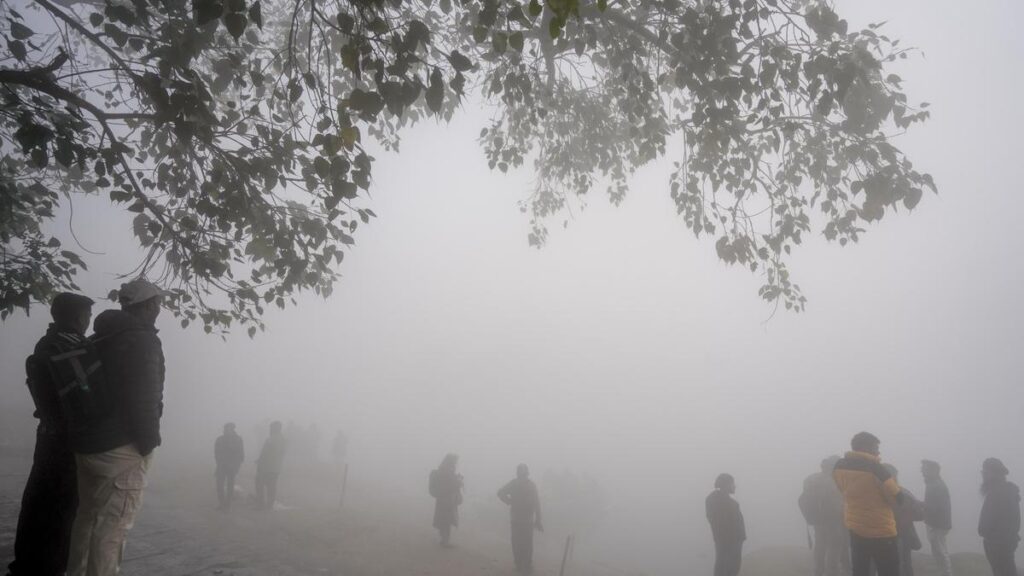
Delhi continued to choke under a thick blanket of smog on Monday, with the Air Quality Index (AQI) touching 498, placing it at the upper end of the ‘severe’ category.
Data from the Central Pollution Control Board (CPCB) showed that air quality was classified as ‘severe’ at 38 monitoring stations, while two stations recorded ‘very poor’ levels. Jahangirpuri reported the worst air quality among all 40 stations.
The AQI had climbed to 461 on Sunday, marking Delhi’s most polluted day of the winter so far and the second-worst December air quality reading on record. Meteorological conditions such as weak winds and low temperatures contributed to pollutants remaining trapped close to the surface.
According to CPCB standards, an AQI between 401 and 500 is considered ‘severe’ and poses serious health risks, especially for children, the elderly, and those with respiratory ailments.
With the matter set for hearing later this week, the Supreme Court is expected to examine enforcement gaps, compliance by authorities, and additional safeguards, particularly concerning children and vulnerable populations.
The case is likely to remain under close judicial scrutiny as Delhi-NCR enters the peak winter pollution period.
