
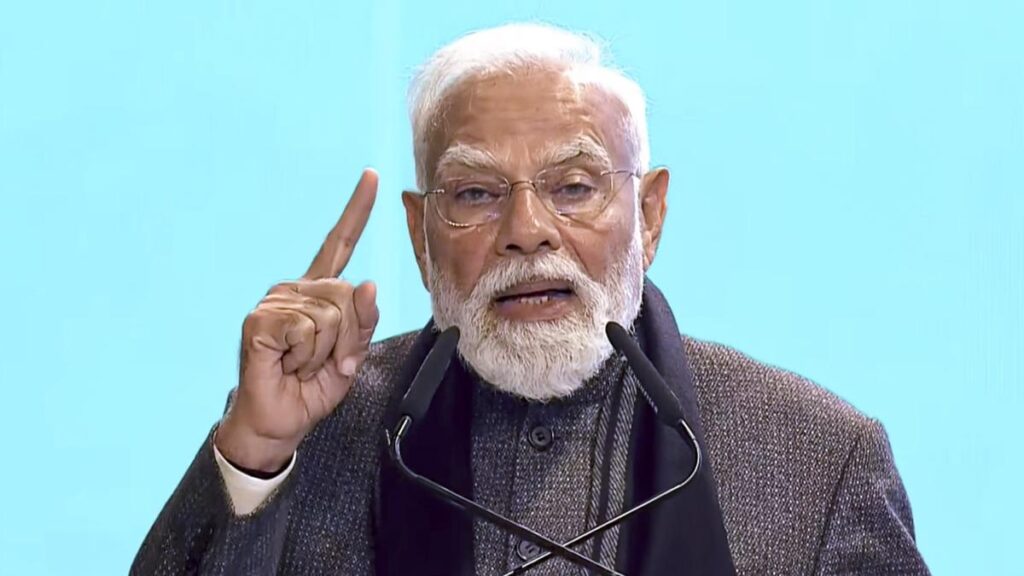
Prime Minister Narendra Modi on Friday highlighted the growing need for global cooperation in traditional medicine, saying the second WHO Global Summit on Traditional Medicine strengthened international collaboration in health.
Speaking at the closing ceremony at Bharat Mandapam in New Delhi, the Prime Minister said the summit brought together health ministers, policymakers, scientists, and experts from across the world. He noted that participants held focused discussions over three days on research, regulation, and knowledge sharing.
“The discussions at this summit have opened new doors for cooperation in research, training, and capacity-building,” Mr. Modi said.
India’s Leadership in Traditional Medicine
The Prime Minister underlined India’s leadership in promoting traditional medicine at the global level. He said India takes pride in hosting the World Health Organization’s Global Centre for Traditional Medicine in Jamnagar, Gujarat.
Mr. Modi said the centre reflects India’s long-standing contribution to holistic healthcare. He added that India remains committed to sharing traditional knowledge through scientific and evidence-based methods.
Bridging Tradition and Technology
Mr. Modi said the summit showcased how modern technology can strengthen traditional healthcare systems. He pointed to digital health platforms, artificial intelligence tools, and research innovations displayed during the event.
“When tradition works with technology, global health systems become stronger,” the Prime Minister said. He added that this approach benefits both India and the wider world.
Global Traditional Medicine Library Launched
The Prime Minister highlighted the launch of the Traditional Medicine Global Library as a major outcome of the summit. He said the platform will bring together scientific data, research papers, and policy documents in one place.
Mr. Modi said the library will improve transparency and support evidence-based policymaking. He added that it will also help preserve traditional knowledge responsibly.
Strengthening International Partnerships
Mr. Modi reiterated India’s focus on building global “partnerships of healing.” He announced two major collaborations during the summit.
India will establish a Centre of Excellence for BIMSTEC countries across South and South-East Asia. India will also work with Japan to integrate science, traditional practices, and healthcare delivery.
“These partnerships show that global health challenges need collective solutions,” the Prime Minister said.
Restoring Balance as a Health Imperative
Referring to the summit theme, “Restoring Balance: The Science and Practice of Health and Well-being,” Mr. Modi said balance lies at the core of holistic health systems like Ayurveda.
He said Ayurveda defines health as a state of balance in the body. He added that imbalance often leads to disease.
Mr. Modi said many modern illnesses stem from lifestyle-related imbalance. These include diabetes, heart disease, depression, and cancer.
He listed work stress, unhealthy diets, poor sleep, gut health issues, excess calorie intake, and emotional stress as key contributors.
Call for Urgent Global Action
The Prime Minister said restoring balance has become a global necessity. He urged countries to act faster to address lifestyle-related diseases.
“Restoring balance is not just a cause. It is a global urgency,” Mr. Modi said.
He called on nations to convert dialogue into action through cooperation, innovation, and shared responsibility.
The WHO Global Summit on Traditional Medicine drew delegations from several countries and international organisations. The event highlighted the growing global push to integrate traditional medicine into modern healthcare systems.
