
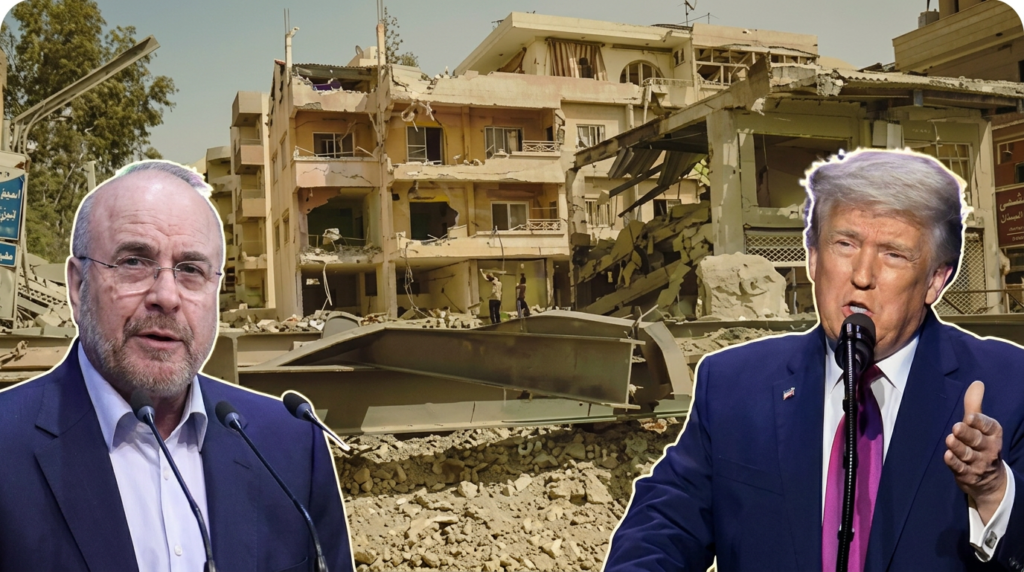
The latest escalation in rhetoric between Iran and former United States President Donald Trump marks more than a political disagreement. It represents a deeper fracture in how global narratives around conflict, power, and control of critical economic chokepoints are being shaped. Iran’s sharp rebuttal to what it described as “7 claims, 7 lies” in response to Trump’s assertions of a decisive war victory introduces a new layer of strategic ambiguity at a time when clarity is already in short supply. At the center of this dispute lies not just the question of who controls the narrative of military success, but a far more consequential issue for the global economy: whether the Strait of Hormuz, the world’s most critical oil transit route, can reliably remain open. Iran’s statements raising doubts about the reopening or stability of this corridor have implications that extend far beyond regional tensions, touching upon global energy markets, inflation trajectories, currency stability, and the broader architecture of international trade. What appears on the surface as a rhetorical exchange is in fact a signal that geopolitical tensions in West Asia are entering a phase where perception and economic leverage are becoming as important as military positioning.
The Strategic Significance of Narrative and Power Projection
Iran’s rejection of Trump’s claims must be understood within the broader framework of how states construct legitimacy and influence in international affairs. When Trump framed the conflict as a victory, he was not merely addressing a domestic audience but also attempting to reinforce the perception of United States dominance in a region where influence has been increasingly contested. Iran’s counter narrative, labeling these claims as false, is equally strategic. It seeks to undermine that perception while reinforcing its own image as a resilient regional power capable of resisting external pressure. This battle over narrative is not symbolic alone. It has direct implications for alliances, deterrence strategies, and the confidence of global markets. When conflicting narratives emerge without a clear resolution, uncertainty becomes the dominant force. Markets do not react to truth alone. They react to perceived risk, and in this case, the divergence in narratives amplifies that risk. Investors, governments, and corporations must now operate in an environment where the actual state of conflict is less clear, making decision making more complex and often more cautious. This ambiguity feeds into volatility across asset classes, particularly in commodities and currencies, where geopolitical signals are closely monitored. Iran’s emphasis on challenging the narrative also indicates a broader shift in strategy, where controlling the economic consequences of conflict becomes as important as controlling territory or military outcomes.
Hormuz as the Economic Artery of Global Stability
The Strait of Hormuz is not merely a geographic passage. It is the central artery through which a significant portion of the world’s oil supply flows. Any uncertainty around its accessibility has immediate and far reaching consequences. Iran’s decision to raise doubts about its reopening or stability introduces a structural risk into the global energy system. Even without a physical blockade, the perception that the strait could be disrupted is enough to influence oil prices. Traders price in risk, and when that risk involves a chokepoint that handles a substantial share of global oil shipments, the impact is magnified. Higher oil prices translate into higher transportation costs, increased manufacturing expenses, and ultimately higher consumer prices across economies. For countries that rely heavily on imported energy, such as India, the implications are particularly severe. A sustained increase in crude prices can widen fiscal deficits, weaken currencies, and strain economic growth. At the same time, shipping companies and insurers may raise premiums to account for increased risk, further adding to the cost of global trade. This creates a cascading effect where a localized geopolitical tension transforms into a global economic challenge. The uncertainty around Hormuz is therefore not just a regional issue. It is a systemic risk that affects the stability of the global economy.
Economic Ripple Effects Across Markets and Nations
The interplay between geopolitical tension and economic consequence is rarely linear. In this case, the potential instability in Hormuz interacts with existing global economic pressures, creating a complex web of outcomes. Oil price volatility feeds directly into inflation, which remains a critical concern for central banks worldwide. Higher inflation can lead to tighter monetary policies, including higher interest rates, which in turn affect investment, consumption, and overall economic growth. For emerging markets, the impact is often more pronounced. Currency depreciation can accelerate as capital flows shift towards perceived safe assets, such as the United States dollar. This further increases the cost of imports, creating a feedback loop that exacerbates inflationary pressures. In India, where energy imports form a significant part of the trade balance, these dynamics can strain both fiscal and external accounts. Government spending may need to increase to manage inflation or provide subsidies, while revenues may not keep pace, leading to higher borrowing requirements. At the same time, sectors such as aviation, logistics, and manufacturing face rising input costs, which can reduce profitability and slow expansion. Investors, both domestic and international, must reassess risk exposure in such an environment, often leading to increased market volatility. The uncertainty surrounding Hormuz thus becomes a catalyst that amplifies existing economic vulnerabilities.
Military Positioning and Strategic Calculations
Beyond economic implications, the current situation reflects a recalibration of military and strategic positioning in the region. The United States has long maintained a presence in West Asia to secure trade routes and project power, while Iran has developed capabilities aimed at challenging that presence. The exchange of narratives between Iran and Trump highlights the ongoing contest for influence. Iran’s willingness to question the stability of Hormuz can be seen as a form of strategic signaling. It communicates that the country retains leverage over a critical global asset, even in the face of external pressure. This form of leverage does not necessarily require direct confrontation. The mere possibility of disruption can be sufficient to influence behavior. Other regional actors, including Gulf states, must navigate this environment carefully. Their economies are closely tied to the stability of oil exports, and any disruption can have immediate fiscal consequences. At the same time, global powers such as China and the European Union have a stake in ensuring that trade routes remain open. This creates a complex network of interests where multiple actors are simultaneously seeking stability while preparing for potential disruption. The resulting dynamic is one of cautious engagement, where overt escalation is avoided but underlying tensions remain unresolved.
The Role of Perception in Global Markets
One of the most critical aspects of the current situation is the role of perception. Markets operate on expectations, and those expectations are shaped by narratives as much as by facts. Iran’s rejection of Trump’s claims introduces a competing narrative that challenges the notion of stability. When combined with doubts about Hormuz, this creates a perception of heightened risk. Even in the absence of immediate disruption, this perception can drive significant market movements. Oil prices may rise in anticipation of supply constraints, while equity markets may experience volatility as investors reassess risk. Safe haven assets, including gold and certain currencies, may see increased demand. This shift in asset allocation reflects a broader trend where geopolitical uncertainty becomes a key driver of financial behavior. Central banks and policymakers must also respond to these dynamics, balancing the need to control inflation with the need to support economic growth. The interplay between perception and policy creates a feedback loop that can either stabilize or destabilize markets, depending on how events unfold.
India and the Strategic Implications of Energy Dependence
For India, the situation carries particular significance. As one of the world’s largest importers of crude oil, the country is highly sensitive to disruptions in global energy supply. The Strait of Hormuz is a critical route for a substantial portion of India’s oil imports. Any uncertainty around its accessibility directly impacts the country’s economic stability. Higher oil prices can increase the cost of fuel, transportation, and production, leading to broader inflationary pressures. This can affect everything from household budgets to industrial output. At the same time, a weaker currency can increase the cost of imports, further straining the economy. Policymakers must therefore navigate a complex environment where external factors play a significant role in domestic outcomes. Strategic reserves, diversification of energy sources, and diplomatic engagement become essential tools in managing this risk. However, these measures can only mitigate, not eliminate, the impact of global disruptions. The current situation underscores the importance of long term strategies aimed at reducing dependence on external energy sources, including investments in renewable energy and domestic production.
What This Signals for the Global Order
The broader significance of Iran’s rejection of Trump’s claims and the uncertainty around Hormuz lies in what it reveals about the evolving global order. Traditional assumptions about stability, control, and predictability are being challenged. Power is becoming more distributed, and influence is increasingly contested. Economic interdependence means that local conflicts have global consequences, while technological advancements amplify the speed and scale of those consequences. The current situation is a reminder that geopolitical risk is not an abstract concept. It is a tangible factor that influences economic outcomes, policy decisions, and individual livelihoods. Governments, corporations, and investors must adapt to this reality, developing strategies that account for uncertainty and complexity. This includes building resilience into supply chains, diversifying investments, and maintaining flexibility in policy responses. The ability to navigate this environment will be a key determinant of success in the years ahead.
Conclusion
The dispute between Iran and Trump over war claims, combined with the uncertainty surrounding the Strait of Hormuz, represents a convergence of narrative, strategy, and economic risk that cannot be dismissed as routine geopolitical noise. It highlights the fragility of systems that underpin global stability, from energy supply chains to financial markets. As narratives diverge and uncertainties increase, the margin for error narrows, making informed decision making more critical than ever. The situation serves as a reminder that global stability is not a fixed state but a dynamic balance that must be continuously managed. For observers and participants alike, the key question is not just what is happening now, but what it signals for the future. Will tensions escalate into tangible disruptions, or will diplomatic efforts restore a degree of stability. The answer will shape not only the trajectory of the region but also the broader contours of the global economy. What remains clear is that the interplay between geopolitics and economics is intensifying, and understanding this relationship is essential for navigating an increasingly complex world.
