
A Statement of Resolve Beyond Symbolism
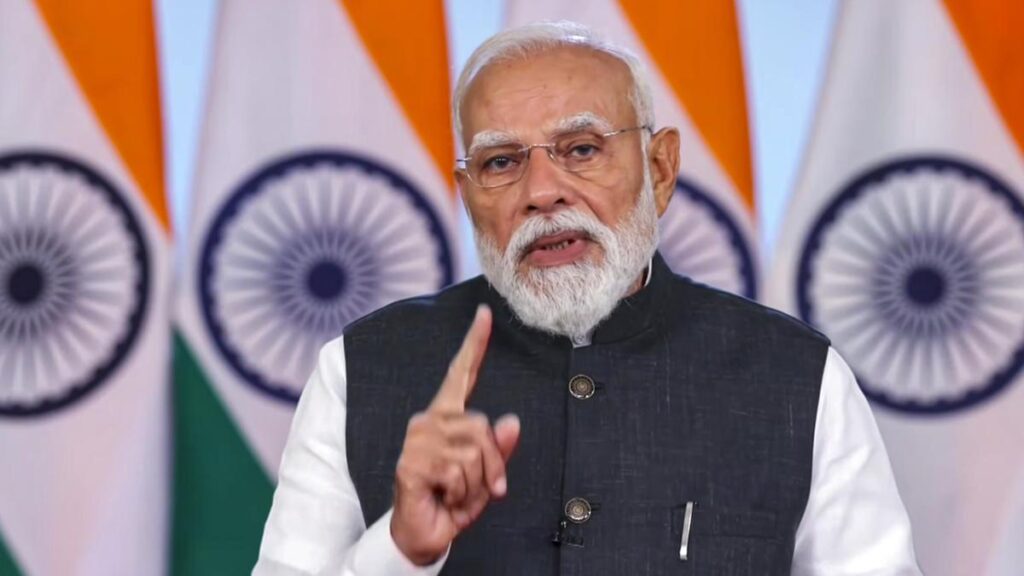
Prime Minister Narendra Modi’s statement on the anniversary of the Pahalgam attack that India will never bow to any form of terror carries significance that extends beyond commemorative rhetoric, positioning itself as a reaffirmation of strategic doctrine in an increasingly complex geopolitical environment. The Modi Pahalgam attack anniversary statement is not merely a reflection on a past tragedy but an articulation of policy continuity, where the Indian state signals both domestic and international audiences that its approach to terrorism remains anchored in deterrence, resilience, and assertive response. Such statements are often interpreted through the lens of domestic politics, yet their implications reach far deeper into the architecture of regional security, particularly in South Asia where historical tensions, unresolved disputes, and asymmetric threats continue to shape state behavior. The timing of the statement, aligned with the anniversary of an attack that symbolized vulnerability in a region closely tied to both national identity and economic potential, underscores the importance of narrative in statecraft. By emphasizing an uncompromising stance, India seeks to reinforce a perception of strength that serves both as a deterrent to adversaries and as reassurance to citizens and investors. This dual objective reflects the evolving nature of security policy, where the boundaries between internal stability and external positioning are increasingly blurred. In this context, the Modi Pahalgam attack anniversary statement becomes a strategic signal, communicating intent while shaping expectations in a region where perception often influences reality.
The Strategic Context of Terrorism in South Asia
To understand the full implications of the Modi Pahalgam attack anniversary statement, it is essential to situate it within the broader strategic context of terrorism in South Asia, a region where non state actors have historically played a significant role in shaping security dynamics. The persistence of cross border terrorism has created a security environment characterized by unpredictability, where conventional deterrence mechanisms are often insufficient to address asymmetric threats. India’s response over the years has evolved from reactive measures to a more proactive posture, incorporating intelligence coordination, targeted operations, and diplomatic engagement aimed at isolating sources of support for such activities. The reaffirmation of a zero tolerance approach reflects this evolution, signaling that the state is prepared to maintain pressure across multiple dimensions. At the same time, the regional context adds complexity to this stance, as neighboring countries must balance their own internal challenges with external pressures. The interplay between state and non state actors creates a dynamic where actions in one domain can have unintended consequences in another, requiring a careful calibration of policy. The Modi Pahalgam attack anniversary statement therefore must be seen as part of a broader strategy that seeks to manage these complexities while maintaining a clear and consistent message. This approach is not without risks, as heightened assertiveness can lead to escalation if not accompanied by effective communication and confidence building measures. However, it also reflects the recognition that ambiguity can be exploited by adversaries, making clarity of intent a critical component of deterrence.
Economic Implications of Security Signaling
The relationship between security policy and economic outcomes is often indirect but profoundly significant, particularly in emerging economies where investor confidence is closely tied to perceptions of stability. The Modi Pahalgam attack anniversary statement, while focused on security, has implications that extend into economic domains, influencing how global markets and investors assess risk in India. A strong and consistent stance against terrorism can enhance perceptions of stability, signaling that the state is capable of managing internal threats and maintaining order. This, in turn, can support investment flows, particularly in sectors such as infrastructure, tourism, and manufacturing that are sensitive to security conditions. However, the relationship is not linear. Heightened security rhetoric, if perceived as indicative of rising tensions, can also introduce uncertainty, particularly if it is accompanied by visible escalation in regional dynamics. Markets respond not only to policy statements but to the broader context in which they are made, including developments in neighboring countries and global geopolitical trends. The economic impact of terrorism itself is multifaceted, affecting not only direct sectors such as tourism but also broader indicators such as consumer confidence and government spending. Increased security measures often require significant fiscal resources, which can influence budgetary priorities and economic planning. In this context, the Modi Pahalgam attack anniversary statement reflects an attempt to balance the need for strong security signaling with the imperative of maintaining economic stability, recognizing that both dimensions are interconnected.
Global Signaling and the War on Terror Narrative
At the international level, the Modi Pahalgam attack anniversary statement contributes to the ongoing narrative of the global war on terror, positioning India as a key actor in efforts to combat extremism and maintain regional stability. This positioning has strategic implications, particularly in terms of India’s relationships with major powers that share similar concerns about terrorism. By articulating a clear and uncompromising stance, India aligns itself with broader international efforts, reinforcing its role as a responsible stakeholder in global security. This alignment can facilitate cooperation in areas such as intelligence sharing, counter terror financing, and capacity building, enhancing India’s ability to address threats effectively. At the same time, the global context introduces additional considerations, as different countries may have varying perspectives on how terrorism should be addressed and what constitutes appropriate responses. The Modi Pahalgam attack anniversary statement therefore operates within a complex web of international relationships, where signaling must be calibrated to maintain alignment without compromising national interests. The emphasis on resilience and refusal to bow to terror also serves a symbolic function, reinforcing a narrative of strength that resonates beyond national borders. This narrative can influence how India is perceived globally, affecting not only security cooperation but also economic partnerships and diplomatic engagement.
India’s Domestic Landscape and Policy Continuity
Within India, the Modi Pahalgam attack anniversary statement reinforces a sense of policy continuity, signaling that the approach to terrorism remains consistent despite changing circumstances. This continuity is important for maintaining public confidence, particularly in regions that have experienced the direct impact of such incidents. It also reflects the institutionalization of counter terror strategies, where policies are designed to operate over the long term rather than in response to specific events. The integration of security considerations into broader governance frameworks highlights the recognition that stability is a prerequisite for development, particularly in regions with significant economic potential. The emphasis on resilience and determination also serves to shape public perception, reinforcing the idea that the state is capable of protecting its citizens while pursuing growth and development. At the same time, the domestic context requires a careful balance between security measures and civil liberties, ensuring that policies do not undermine the social fabric they are intended to protect. The Modi Pahalgam attack anniversary statement therefore reflects a broader approach to governance, where security is integrated into a holistic vision of national progress.
Future Scenarios and Strategic Calculations
Looking ahead, the implications of the Modi Pahalgam attack anniversary statement will depend on how it is translated into policy and action, as well as on the responses of other actors in the region and beyond. One possible scenario is that the reaffirmation of a strong stance contributes to deterrence, reducing the likelihood of future incidents by signaling clear consequences. In this case, the economic and strategic benefits could be significant, enhancing stability and supporting growth. Another scenario is that heightened tensions lead to increased activity by non state actors, testing the limits of existing strategies and requiring further adaptation. The role of international partners will also be critical, as cooperation in areas such as intelligence and counter terror financing can influence outcomes. The interplay between domestic policy and international dynamics will shape the trajectory of events, highlighting the importance of flexibility and responsiveness in strategy. The Modi Pahalgam attack anniversary statement thus serves as both a marker of current policy and a starting point for future developments, where the effectiveness of the approach will be measured not only by immediate outcomes but by its ability to adapt to evolving challenges.
Conclusion
The Modi Pahalgam attack anniversary statement represents a convergence of memory, policy, and strategy, where the reaffirmation of a zero tolerance stance on terrorism serves multiple objectives across domestic and international domains. It highlights the importance of clarity in signaling, where the articulation of intent plays a critical role in shaping perceptions and influencing behavior. At the same time, it underscores the interconnected nature of security and economic stability, where actions in one domain can have far reaching implications in another. As India navigates an increasingly complex geopolitical landscape, the ability to maintain this balance will be essential for achieving both security and growth objectives. The statement also serves as a reminder that the challenges posed by terrorism are not static, requiring continuous adaptation and innovation in policy. For observers, the key question is not only how India responds to current threats but how it positions itself for the future, where the dynamics of security and economics will continue to evolve. In this context, the Modi Pahalgam attack anniversary statement is both a reflection of past experiences and a signal of future intent, offering insights into the direction of India’s strategic trajectory.
